
Devotional Dance
Every year on the Sunday closest to the feast day of the Virgin, the Guadalupana Association of the Galveston-Houston Archdiocese organizes a procession as a sacred tribute to the Virgin of Guadalupe. After a re-enactment of the appearance of the Virgin to Juan Diego, the procession departs from the downtown Co-Cathedral and ends at the George R. Brown Convention Center. At the end of the procession, all participants gather for a mass in her honor. The different groups have organized themselves through family, neighborhood and church connections.
These forms of religious dance as acts of devotion and mortification have long been practiced by Mexican and Mexican-American Catholics. The Houston procession draws groups from all parts of the state, and some international ensembles, clad in outfits reflecting traditional ceremonial and patriotic garb. While the Virgin is often the focus, some groups will express their devotion to other holy personages or symbols and at other days that are special to the Catholic calendar. The procession in Houston is made up of scores of different types devotional dance groups known as matachines, danzantes and chinelos.
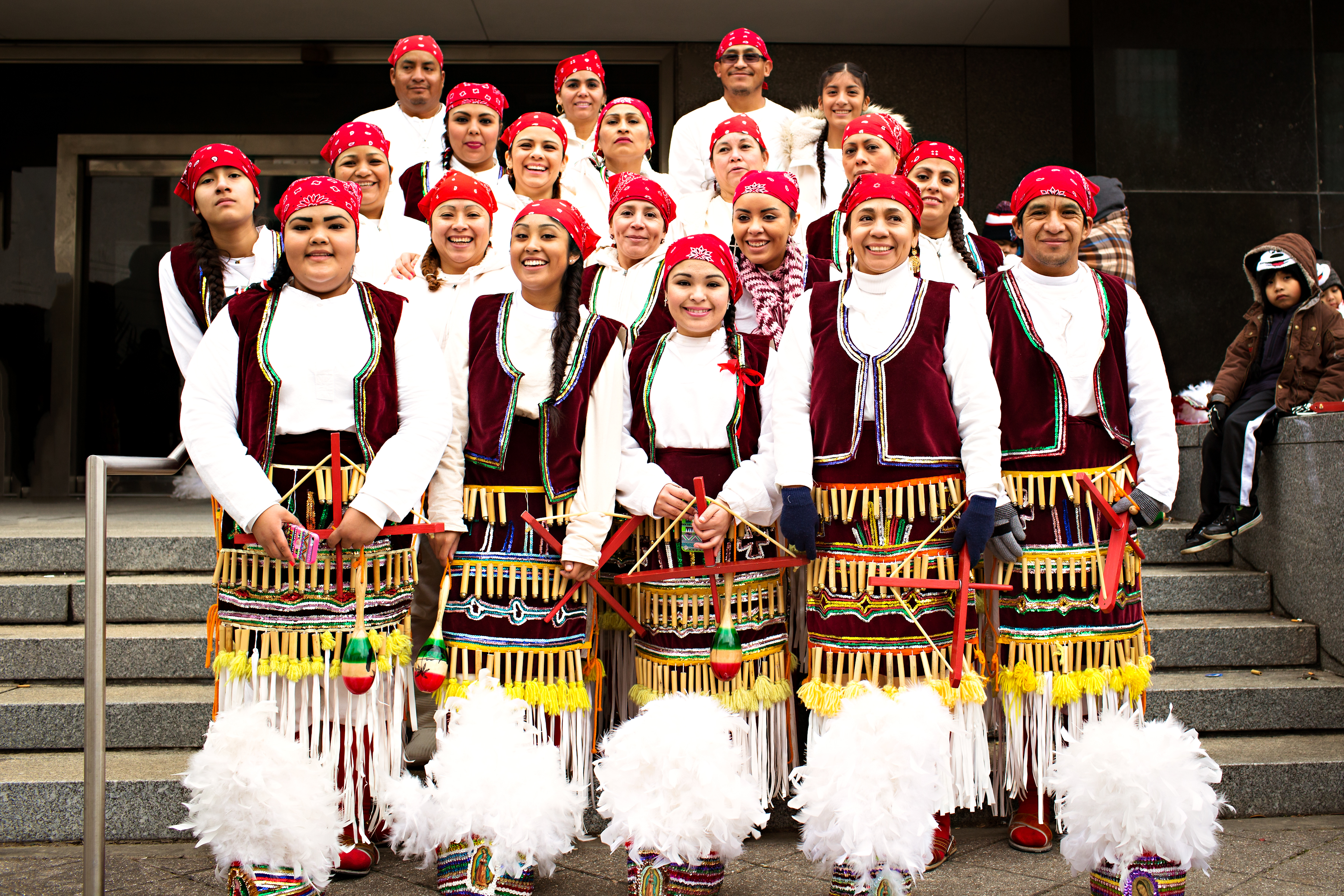
Matachines from Holy Ghost Church. Photo: Doris Ting
An extraordinary part of the celebration for the feast day of the Virgin of Guadalupe in Houston is the amazing number of devotional dance troupes that process and perform as an act of veneration directed toward her. There are three styles of dancers: the matachines, by far the most popular; the danzantes, groups that echo the Aztec links to early Mexican Catholicism; and chinelos, the most ornate and recent addition to Houston procession.
The elaborately decorated garb that all dancers wear distinguishes each group from the other within a particular style (matachin, danzante or chinelo) and clearly distinguishes the styles from each other. Matachines dress in skirt-like garments sometimes referred to as naguillas in Spanish, joined with a vest or shirt of similar color. These vestments are decorated with 3- to 4-inch-long cylinders, made of slender bamboo, PVC pipe or straws, hanging horizontally, often with bells or fringe extending from them. They carry bow-like implements that reflect Native American influences and rattles. The penacho, or headdress, also echoes indigenous headgear. Their outfits are always emblazoned with the name of the group and the holy personage or image to which they primarily dedicate their dance.
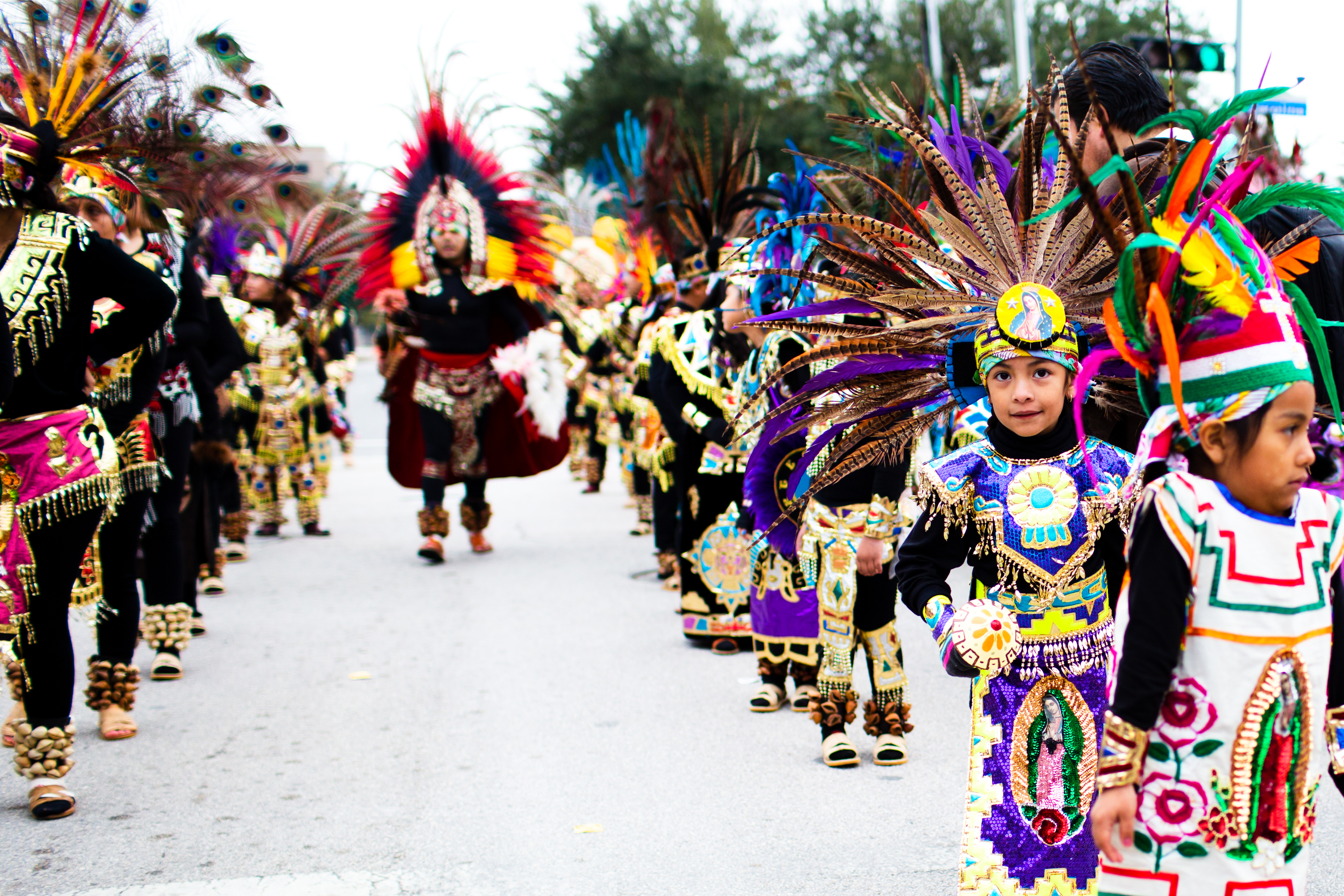
Danzantes Aztecas Guerreros from Holy Ghost church. Photo: Debra Ham
The danzantes as a group do not dress as uniformly, but they always wear apparel that references an indigenous, Meso-American identity. Women wear skirts or tunics and men wear breast plates and loin clothes, all embellished with Aztec imagery. Arms and legs are adorned with bands of shells or bells. The most dramatic portion of the vestment is the penacho, usually grand and high pitched, plumed with a variety of tall and dramatic feathers.
Chinelos wear a full body garment that flows from neck to feet and is made of velvet adorned with sequins, embroidery and beading. They don wire masks which project the light skin and pointy beard of the Spaniards these costumes were once intended to spoof. Finally, their heads are crowned with high hats decorated with a large feather or two, beads, and embroidery or sequins.
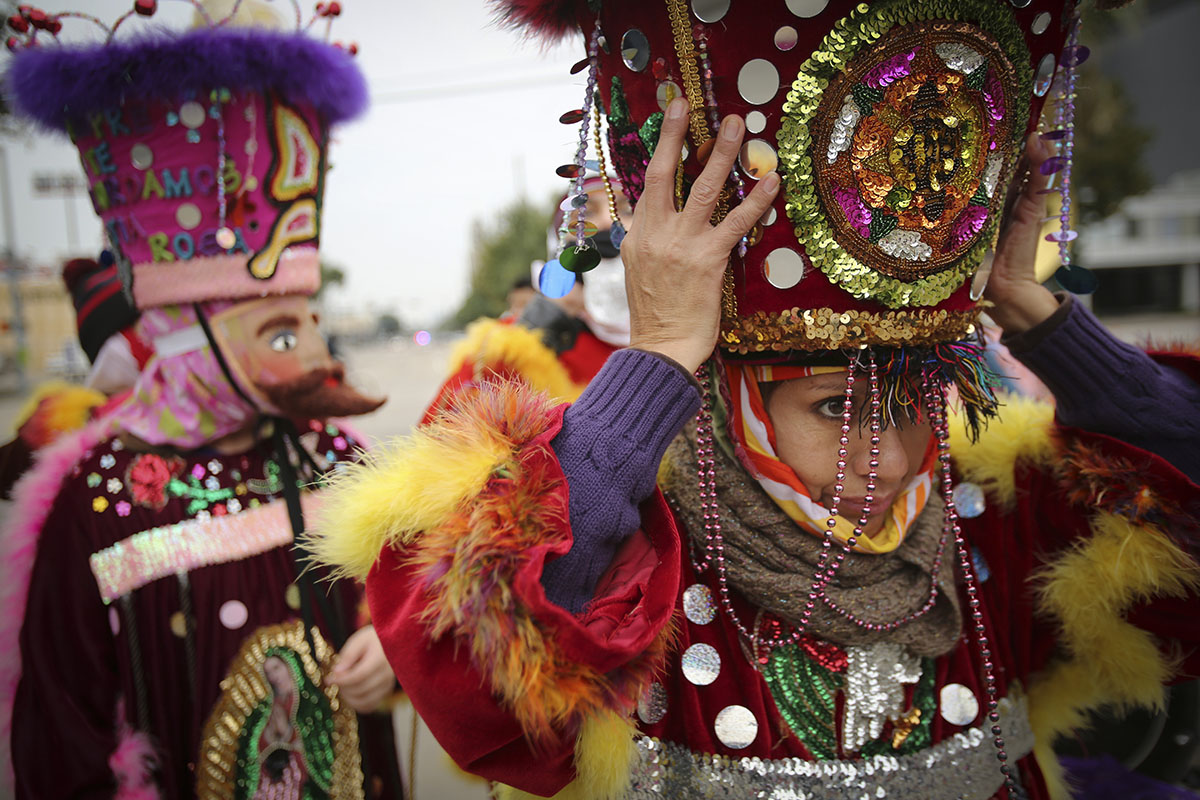
Yamirt Lopez, founder of Chinelos del estado de Morelos. Photo: Mayra Beltran
The musical event that marks the celebration of the feast day of the Virgin of Guadalupe with which most people are familiar is called "Las Mananitas." Usually a full scale mariachi performs at the altar dedicated to her to celebrate the Virgin's feast day as if it were her birthday (Las Mananitas is the traditional song sung for birthdays in Mexico).
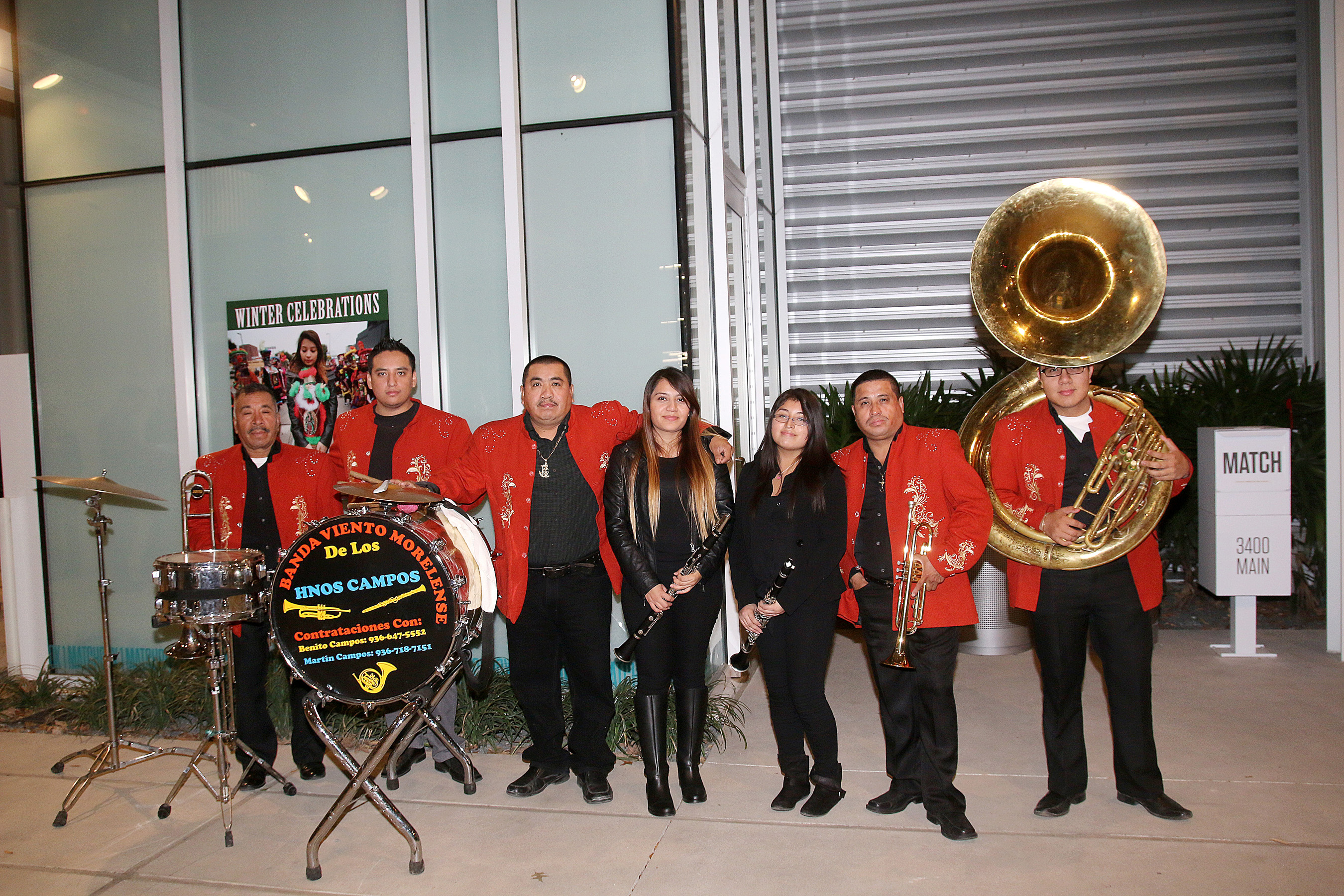
Three generations of Banda Viento Morelense de los Hermanos Campos. Photo: Pin Lim