

Celebrating the Feast Day of the Virgin of Guadalupe
The religious devotional traditions associated with the Virgin of Guadalupe are in practice throughout the year among Catholics who identify strongly with her as a source of inspiration, identity and guidance. Home altars, yard shrines and special chapels in neighborhoods and parishes are dedicated to her and tended year-round. However, as the feast day approaches, individuals, families and church communities make special preparations, refresh their offerings to her and engage in forms of re-consecration that may include a blessing, a dance, a prayer session, a performance of banda or mariachi music or all of them together.
All photos by: Mayra Beltran, Debra Ham, Pin Lim, and Doris Ting


The celebration of the feast day of the Virgin of Guadalupe [the day commemorating her apparition to Juan Diego on a hillside in Mexico City] is a powerful religious and cultural event in the Mexican and Mexican-American Catholic community. This installation explored the artistic and cultural traditions that surround it on all sides – the music, dance, food, drink, special garments, altar building and storytelling. As is often the case with folk arts such as these, aesthetic traditions are embedded in community and cultural practice.


These manifestations are not intended to communicate individual virtuosity, so much as religious adoration through community-oriented, artful offerings. Almost all objects used are handmade. Their beauty resides in the resourcefulness and collectivity they express, and in the time invested to demonstrate immense devotion to the Virgin. They are seen as gifts to her in return for the gifts she has shared with all humankind.

Chinelos dancing at a home altar in North Houston.
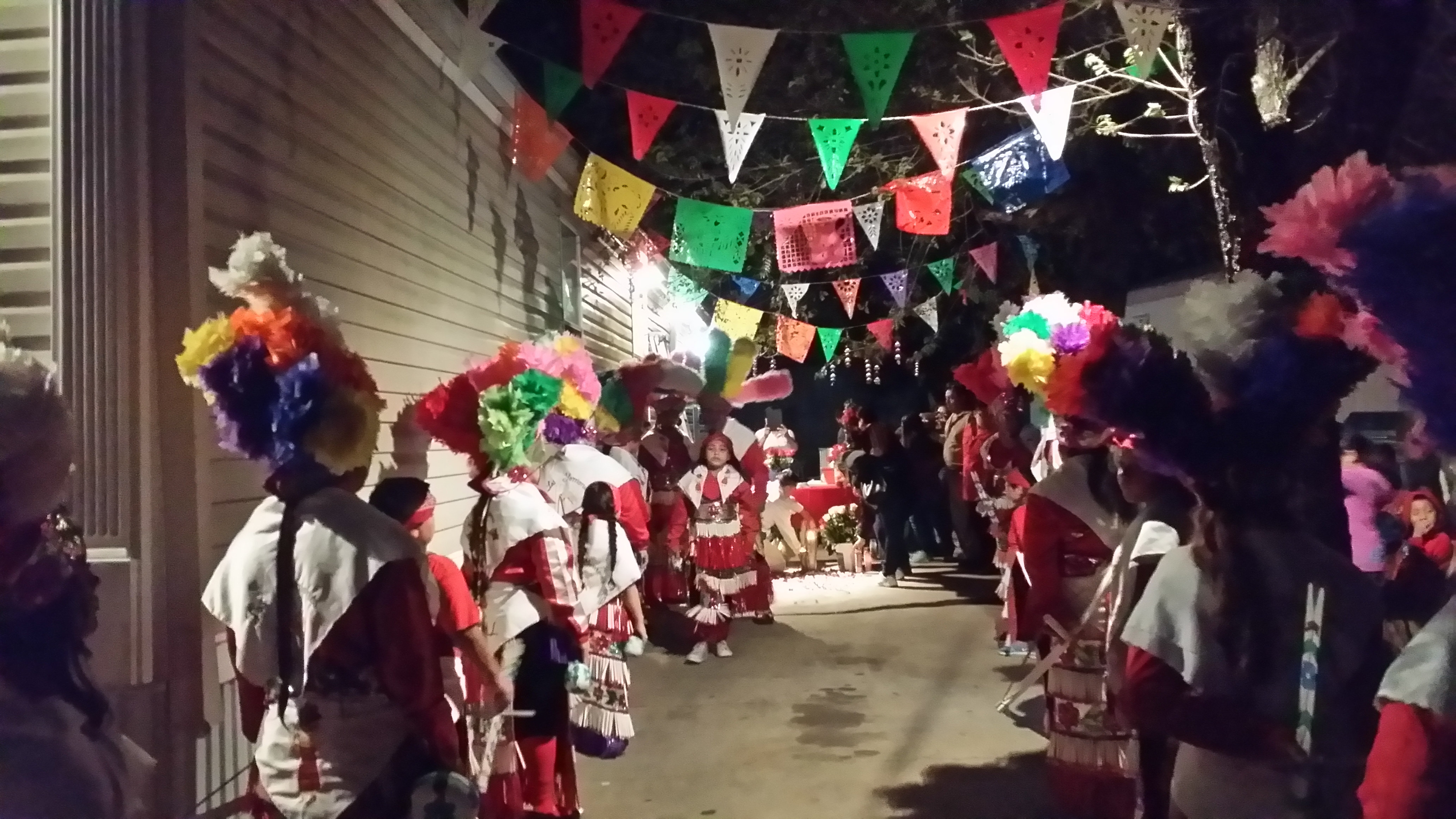
Matachines dancing at a home altar in SW Houston
Altars to the Virgin of Guadalupe are usually maintained year-round and decorated with candles, flowers, photos, lights, and other items of personal interest that may hint at a special relationship with her or blessing from her. Scholarship defines these altars – in the home, the yard, the local parish – as "sites of communication," but they also are artful assemblages. They are crafted with a purposefulness that signifies both expanding abundance and encompassing embrace. Especially around her feast day, which is called the "mananitas," they expand and often take up an entire half room. Altars are part of a whole that is not focused so much on making an artistic statement to the outside world, but instead expressing appreciation for the sense of the beauty and refuge that the Virgin bestows on the life of all participants in the tradition.
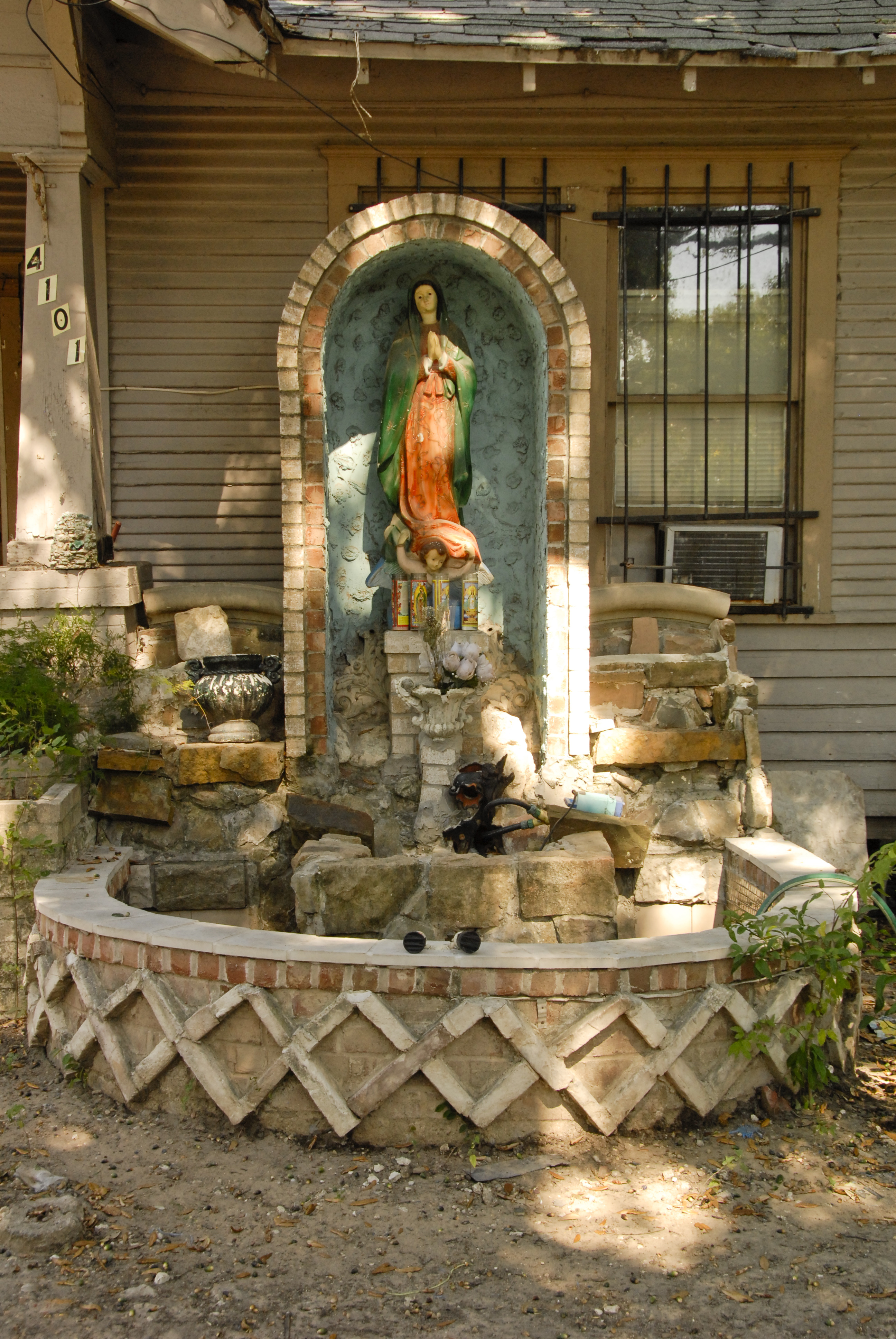
A home shrine to the Virgin of Guadalupe.