

VOICES OF THE SPIRIT
Zilkha Hall - The Hobby Center for the Performing Arts - November 2010
2010 marked the initial concert celebrating devotional music from four Houston faith communities. Participating artists have spent their lives immersed in these sacred music traditions. A celebration of the city’s rich diversity, the concert featured joyous Mariachi mass music by the ten-member Mariachi Norteno, a review of the foot-stomping African-American gospel tradition with nationally-noted Kathy Taylor and Favor, ecstatic and mesmerizing Sufi devotional singing by Ali Durrani and breathtaking Jewish cantorial music with Vadim Tunitsky.

Jesse Escereno and Mariachi Norteno. Houston, TX. 2010
Photo Debra Ham
Jesse Escereño and Mariachi Norteno
Jesse Escereño started singing at church when he was 6 years old. He picked up the vihuela when he was fourteen with encouragement from Bishop Flores who lived down the street from his family, TX. Mariachi Norteno formed shortly thereafter, with Lupe Vasquez on the trumpet and Roy Martinez on the guitar, in response to the need for music during Mass that especially stirred congregants.
Mexican Mariachi traveled from Cuernavaca, Mexico to Houston, TX in this way and made its Texan debut when Jesse and a few friends played the first Mass 43 years ago, in 1967, at St. Joseph’s Catholic Church. Since then, the band has grown and matured with the original members still playing at St. Joseph’s every Sunday in a traditional now called Misa Pan Americana.
It has even taken in new, young members who learn with the old legends and have added some trumpets and violins to the ensemble. One can hear Mariachi Norteño’s repertoire at a young lady’s Quincenera or in a family’s home on Mother’s Day. But the Mass is where congregants come together from around the city to hear Mariachi Norteño sing the service from with the opening procession, through communion, to the final Alleluiah.
A Misa Pan America like the one Mariachi Norteño plays brings together styles from all over Mexico and Southwest United States, using Latin American and Native American styles for a sound that could be regarded as authentically Tex-Mex.
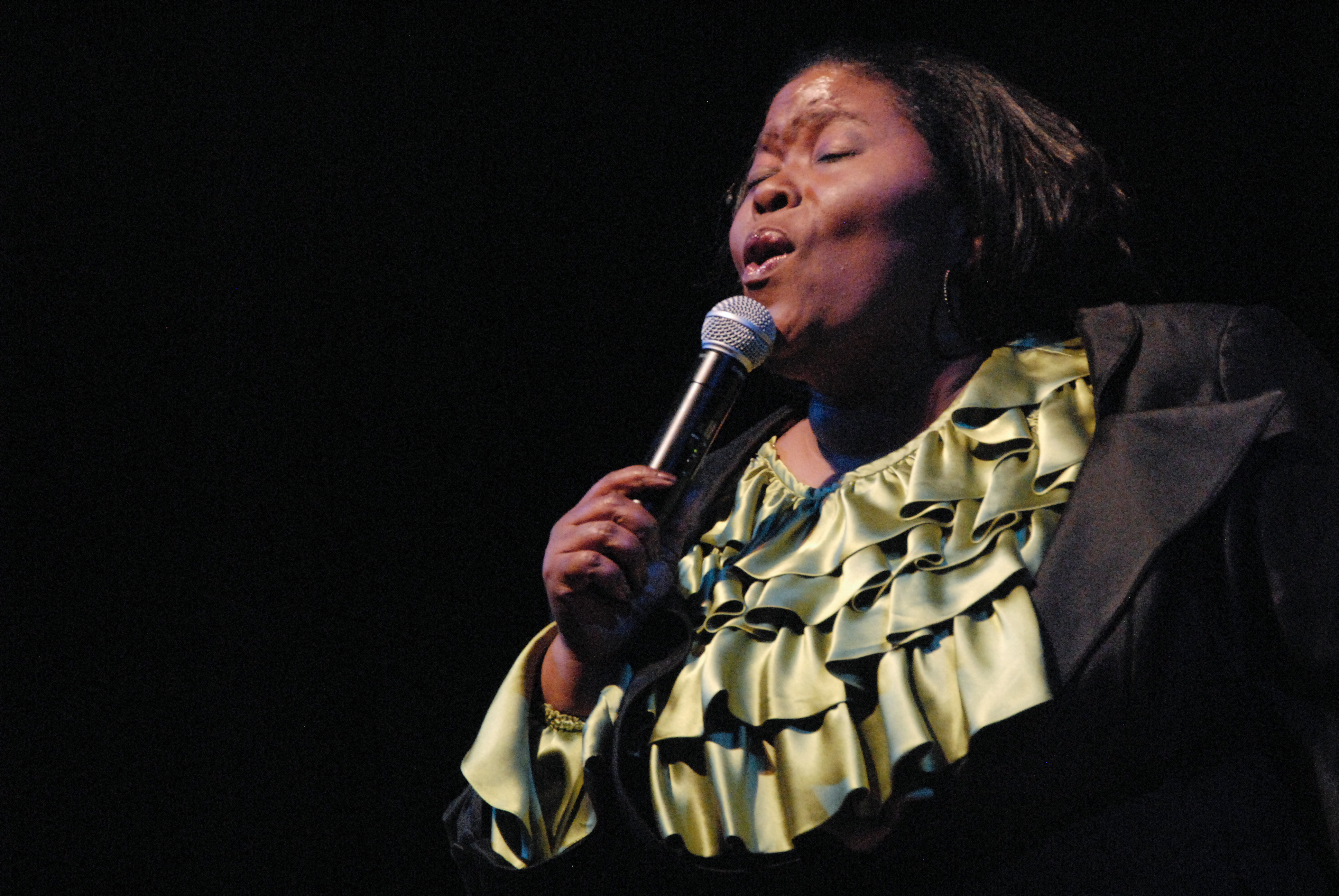
Kathy Taylor performing at Zilkha Hall. Houston, TX. 2010
Photo Debra Ham
Kathy Taylor and Favor
Gospel is a style defined by extolling lyrics, powerhouse performances, and tremendous communities praising one God. Kathy Taylor is defined by all of these plus a personal mission to be an advocate for faith organization and youth in the arts.
She was raised in the tradition of going to a church where prayer was intimately intertwined with song. Her tremendous vocal capacity made her stand apart from others and so she gained opportunity to share her voice at many different occasions. This brought her to her mentor Doroty Norwood from whom she not only received training but the spirit of service and spreading worship that we call in modern terms music ministry.
She is currently the Musical Director at Windsor United Methodist Church, but stays busy with her own organization, singing, speaking, and worshipping with congregants across the United States.

Ali Durrani and Khamaaj performing at Zilkha Hall. Houston, TX. 2010
Photo Debra Ham
Ali Durrani and Khamaaj
Ali remembers being stirred by music in his early childhood. As a young boy in Pakistan, he recognized the genius of greats like Nusrat Fateh Ali Khan before the society members around him. It drew him to study with Khan Saab, (as he endearingly called him), for eight months in Karachi where he received classical training in classical Ragas and South Asian musical composition.
Since then music has been the greatest passion in his life. He moved to America at age fourteen and enjoyed a culture that engaged youth in music and music appreciation. He has continued to teach himself South Asian music and particularly enjoys the rich quality of classical Qawwalis, or Muslim devotional hymns made popular in Pakistan. Though his business specializes in catering to music needs of big stage Bollywood shows and contemporary mixing of music, his revels in this opportunity to share the roots of the traditional yet complex Qawwali.
In addition to the harmonium and tabla, which are the long time accompanists of Qawwali singers, Ali has spent his career using different instruments to experiment with the sound of the traditional Qawwali. He strives to see what could possibly appeal to an increasingly modern and international audience.
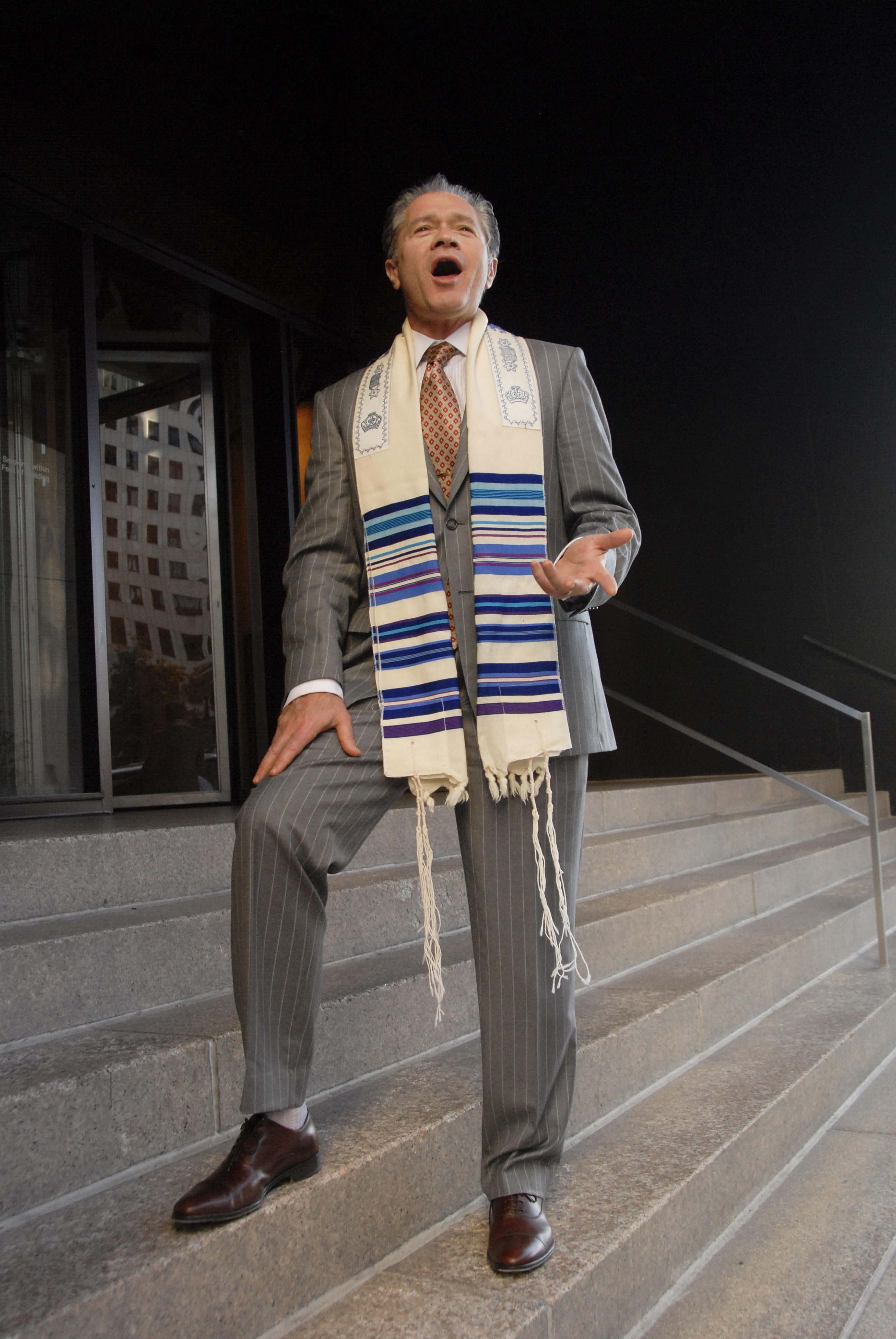
Cantor Vadim Tunitsky. Houston, TX. 2010
Photo Debra Ham
Cantor Vadim Tunitsky
Cantor Tunitsky arrived in the United States in 1988. He is the grandson of the famous Ukrainian Rabbi Gaisinsky, Cantor Tunitsky has officiated more than 1000 weddings (including destination weddings), countless Bar/Bat Mizvahs, baby namings, funerals, and other life cycle events. In Russia, he had completed his degree in Engineering and a Masters in Violin.
He enrolled at Hebrew Union College-Jewish Institute of Religion’s School of Sacred Music in the states. After graduating from the Jewish Institute in 1993, he became Cantor at Congregation Emanu El in 1995.
Since then, he has been very active in presenting Jewish heritage through music around the Houston community. Music is an important part of the Tunitsky family. The Cantor has even preformed with his daughter on several occasions and uses music as a tool for transmitting heritage to younger generations.