

VOICES OF THE SPIRIT IV
The Brown Foundation Performing Arts Theater at Asia Society Texas Center
January 8, 2014
January 9, 2014
In no domain of city life has the remarkable diversity of Houston been more apparent than in its faith communities. Many communities in the city have created an expanded sense of home for themselves through membership in churches, mosques, temples and the like.
It is not surprising, then, that most of these communities have fostered rich sacred music traditions. The 2014 iteration of the Voices of the Spirit presented the Venerables and Devotees of the Chung Mei Buddhist Temple, the a capella gospel group The Soul Influence and Hindustani singer Pandit Suman Ghosh.
The video below provides a glimspe of the rich and diverse presented in the Voices of the Spirit IV concert.
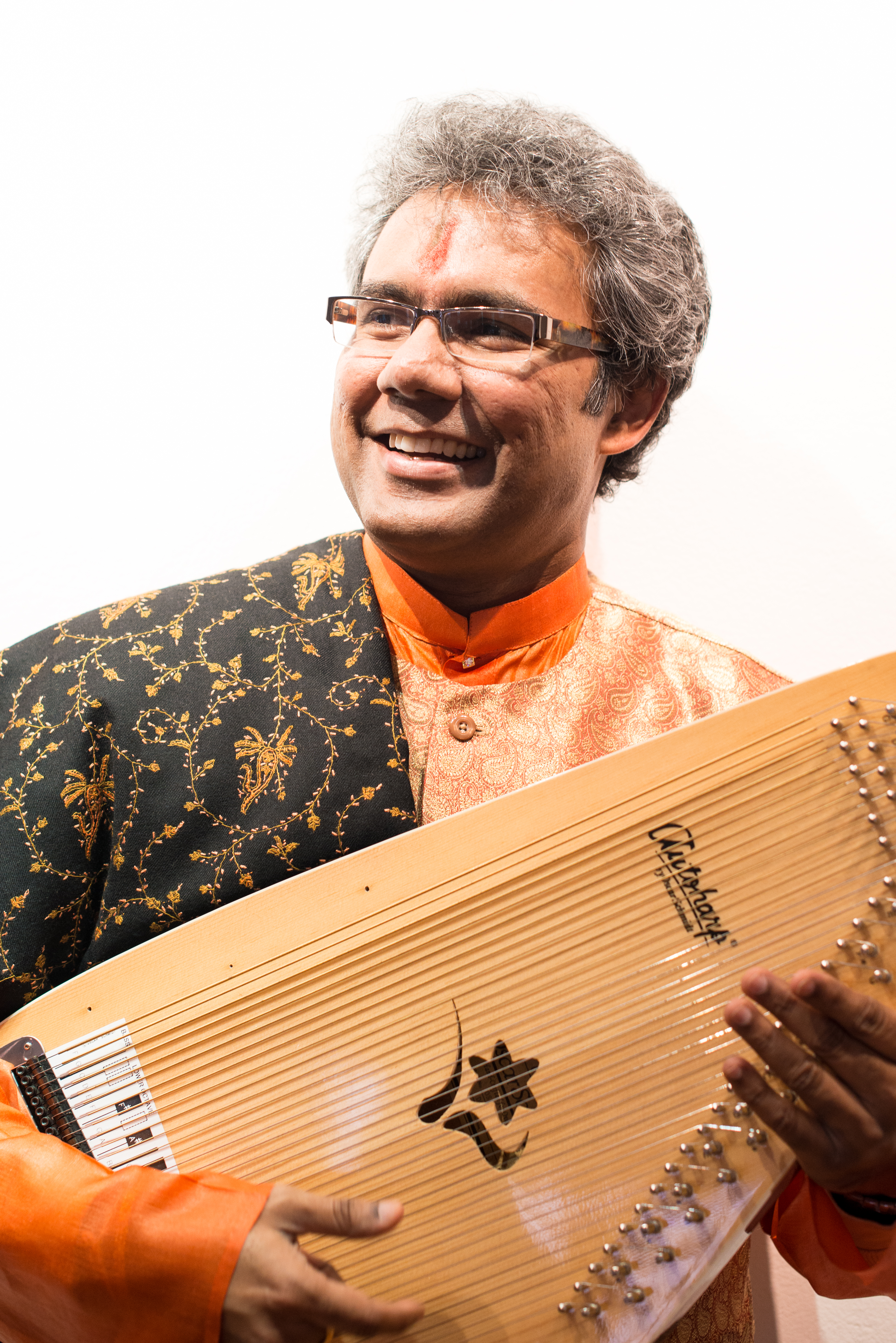
Photo by Debra Ham.
As a senior disciple of the renowned Padma-Vibhushan Pandit Jasraj-ji, Pandit Suman Ghosh is an especially noted flagbearer of the school of Hindustani music known as Mewati Gharana. Now a seasoned and celebrated artist in his own right, Pandit Ghosh is a third generation musician who began his involvement with music at the age of seven under the guidance of his mother. He continued to study with other well-known teachers and graduated eventually to work with the living legend of Indian music, Pandit Jasraj-ji, who transformed him into a full-fledged performing musician. As a result, Pandit Ghosh has performed throughout the U.S., India, and across the globe, sharing the rich musical traditions of Mewati Gharana style worldwide.
Now a resident of Houston, Pandit Ghosh has also carried on the tradition by serving as a teacher to many young musicians in the Houston area and beyond, and by founding the Center for Indian Classical Music Institute of Houston. The music he performs and teaches is associated with Northern India and the Hindu religion, but its roots combine several musical elements, including the Vedic chants, ancient Persian music, and various folk traditions prevalent in the north of India.

Photo by Debra Ham.
The members of Chung Mei Buddhist Temple, both the Venerables who conduct the dharma services there, and the devotees who assist them, are followers of Fo Guang Shan and the International Buddhist Progress Society, founded by the Venerable Master Hsing Yun. The temple was established in Stafford, Texas, in 2001 and is home base to a small but energetic group of Buddhist nuns, referred to as Venerables.
The Venerables lead the dharma services utilizing intoned praise and chanting as central to the worship activities of the congregation. They instruct key members of the congregation in the use of traditional liturgical instruments such as the gong, hand cymbals, drums, and other percussion to accompany this aspect of Buddhist practice. As part of his teachings and from his earliest years, the Venerable Master Hsing Yun stressed the significance of these sacred items and their sound, and the role they can play in transforming Chinese Buddhism in the mid-twentieth century.
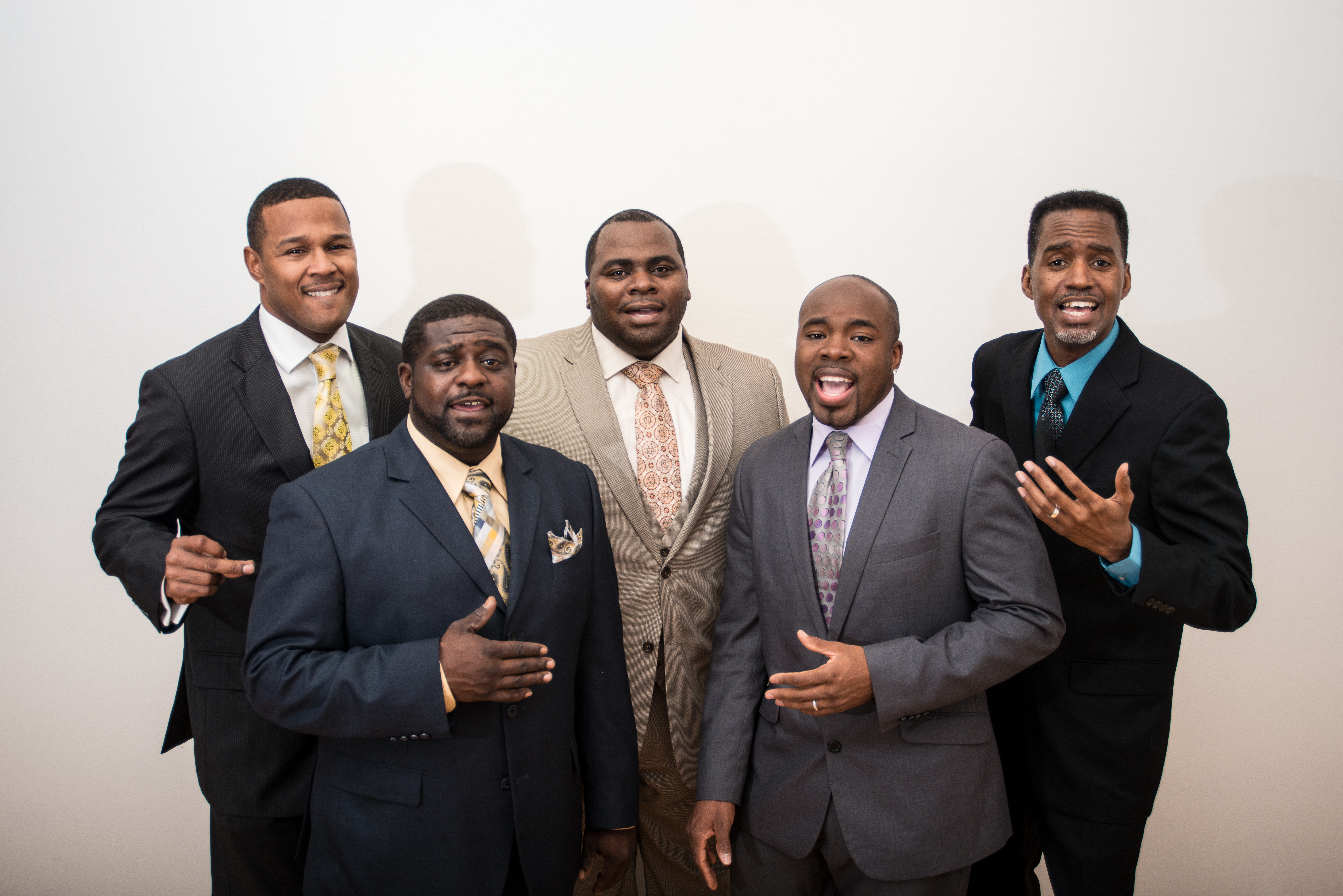
Photo by Debra Ham.
The Soul Influence is a five-man African-American a cappella gospel quartet who perform everything from what is known in the Black church as “The Old One Hundreds” to more contemporary Christian vocal music. They maintain a style, based on four-part harmony (thus, the term quartet — when this group, like most, is comprised of five members), which is seldom heard these days, in church or out. In fact, their style is likely familiar to most listeners as comparable to doo-wop, an early form of rhythm and blues music that emerged in the 1940's and gained widespread popularity in the 1950’s and 60’s. However, it was the gospel quartet tradition itself that actually gave rise to doo-wop, rather than the other way around.
Performing together as an ensemble for close to 15 years, all members of The Soul Influence belong to Church of Christ congregations, which have traditionally disallowed the use of musical instruments in the worship service. Hence, the group’s a cappella singing, and choice to do so in an older style, is enriched by this connection. They perform regularly in special church programs throughout Houston, keeping the rich repertoire and distinctively-syncopated style of this vocal music vital and dynamic.