


For Better and sometimes for worse, these transformations and innovations changed the nature and quality of work on the Channel. They increased productivity and sped up execution. But, in so doing, they reduced the workforce, decreased reliance on sheer muscle and strength, deployed new skills, and replaced or augmented certain kinds of knowledge with others.

The Port of Houston’s pioneering role in workplace modernization is demonstrated by the fact that it hosted the very first container ship to deliver cargo anywhere in the world. Photo courtesy Houston Media Resource Center.
These innovations changed the nature and quality of work on the Channel. They increased productivity and sped up execution. In so doing, they reduced the workforce, decreased reliance on sheer muscle and strength, deployed new skills, and replaced or augmented certain kinds of knowledge with others.
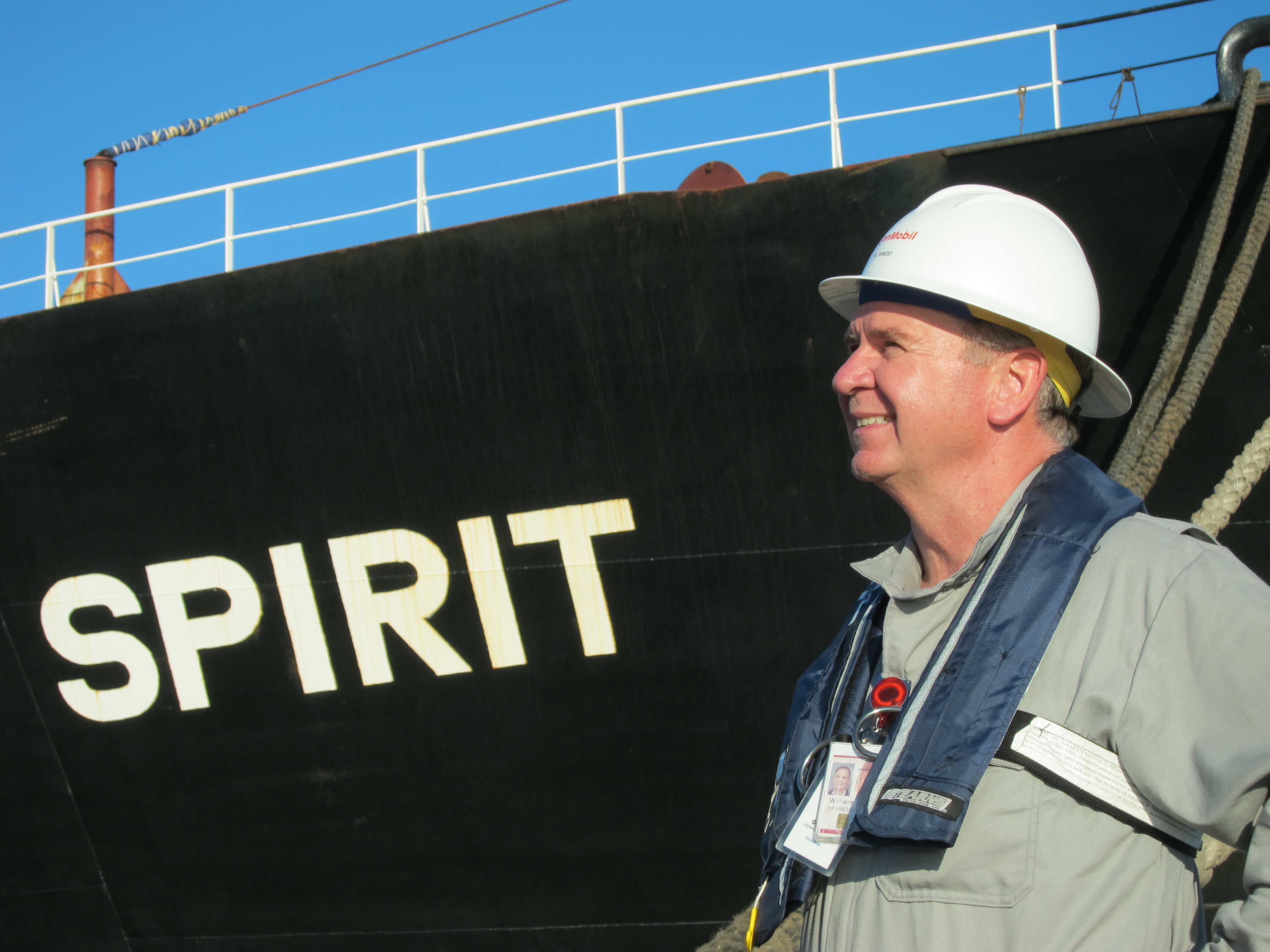
William Hennesey. Photo by Lou Vest.

William Hennessey
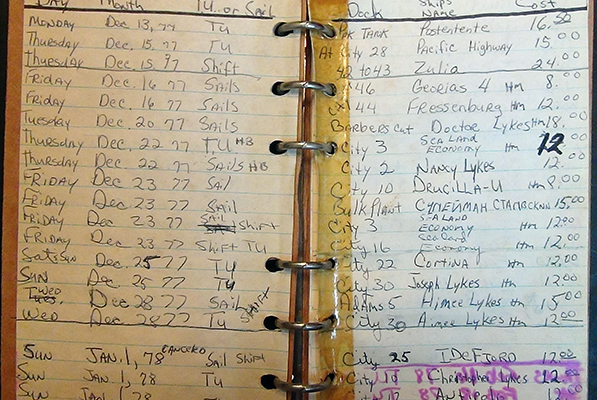
This is an example of a handwritten logbook from a lineman or boatman. This was the mode used to document ship traffic and shift work.
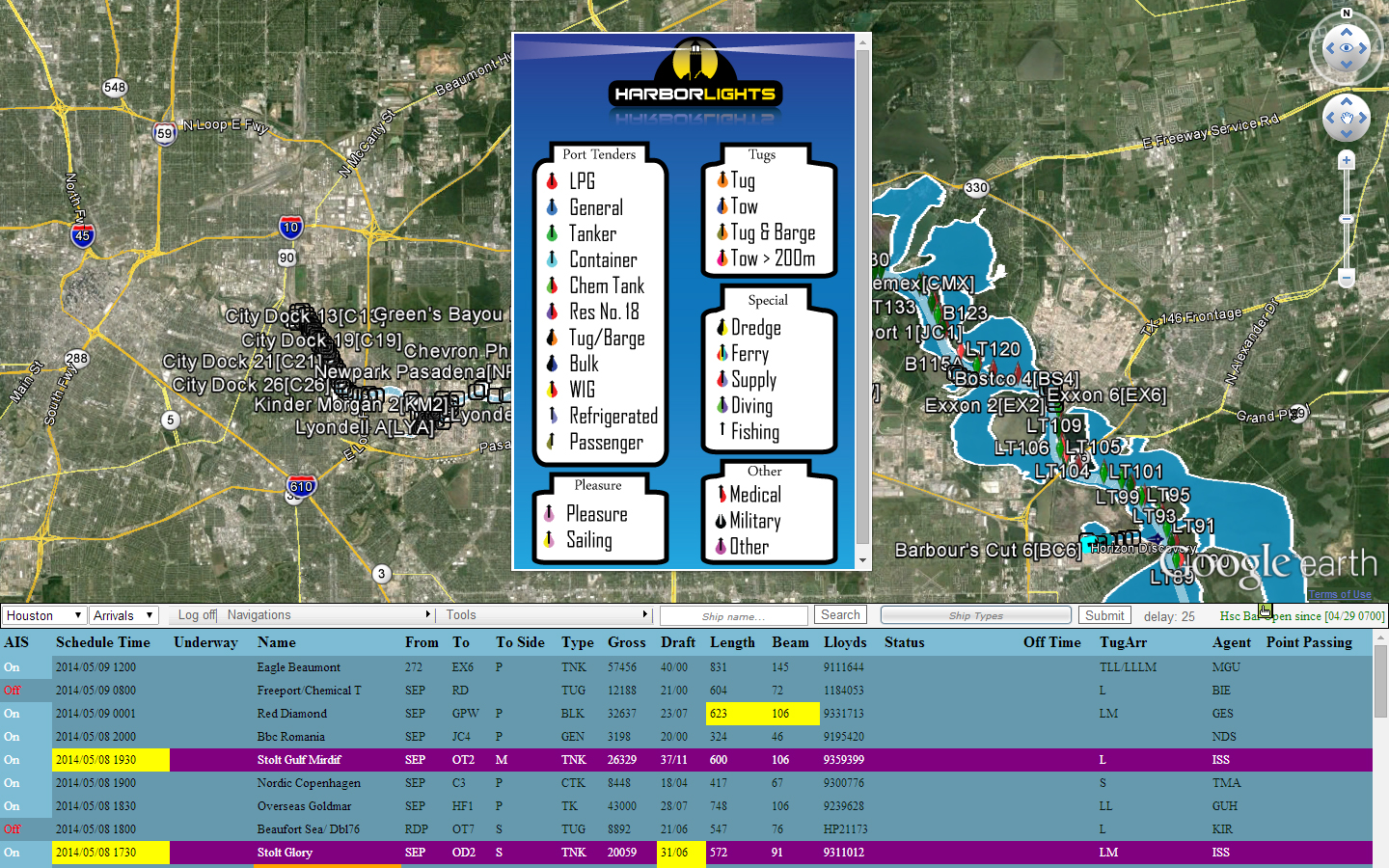
This display from the computerized Harbor Lights program is just one example of the ways in which technology streamlined the transfer of information on the Ship Channel.
Ship Channel workers, young and old, now accept change as inevitable. However, they continue to rely on the knowledge and appreciate the resourcefulness of those who came before them. All acknowledge the rigor of earlier workers who faced the same challenging tasks with simpler tools.
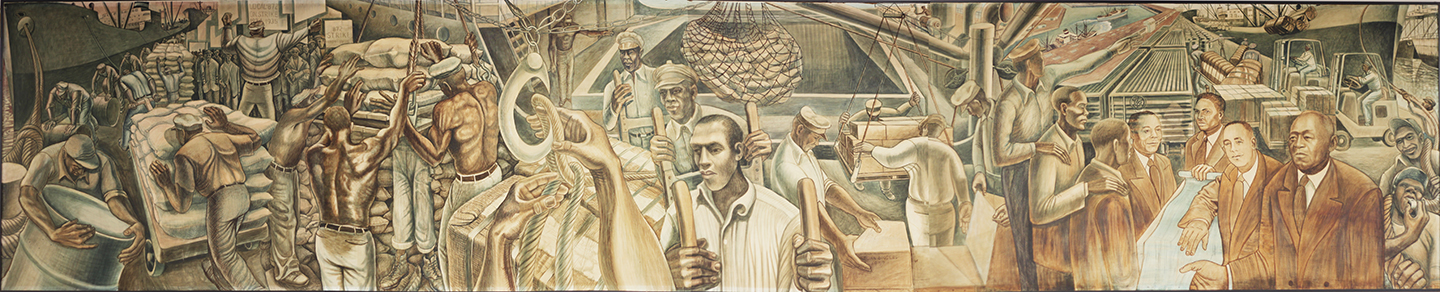
The painting “History of International Longshoreman’s Local 872” by Houston artist John Biggers is a graphic retelling of change and transformation on the docks.
It details the evolution from piecework to containerization to Black unionization and the role of African Americans on the docks. Photo by Neiman Catley.