-
 This Is Our Home, It Is Not For Sale yard sign
 Image of This Is Our Home yard sign
-
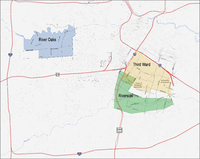 Houston map highlighting the neighborhoods of Riverside, Third Ward, and River Oaks
-
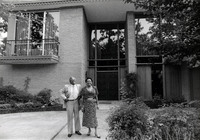 John and Drucie Chase
 John and Drucie Chase stand in front of their home, design by John Chase, in Houston's Riverside neighborhood.
-
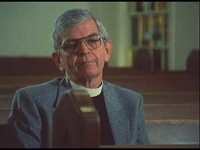 Father Jim Tucker interview clip
 Interview with Father Jim Tucker, discussing the racial makeup of his congregation at St. James' Episcopal Church, and the problem of being neither a wholly black nor white congregation in the community. The interview ends with Tucker discussing the effect living in the neighborhood has had on his family.
-
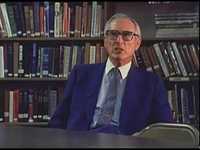 Rabbi Robert I. Kahn interview clip
 Rabbi Robert I. Kahn discusses how he came to live in Riverside. He talks about the attitudes Jewish residents in Riverside held toward integration with the black community. Kahn talks about the pride people in Houston and the South had in executing a peaceful integration.
-
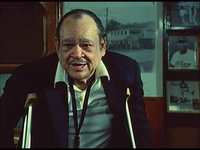 Arnett Cobb interview clip
 Arnett Cobb plays "Down by the Riverside." He describes the house (now the Groovey Grill) he is being interviewed in. When he was a child, his mother was in domestic service in the home, and he would come visit for special occasions. He states that he would have never imagined that mansion would eventually be owned by a black family.
-
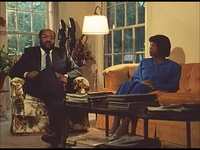 Elwyn Lee interview clip
 Elwyn Lee begins the interview by discussing what it was like to grow up in Houston in the 1950s and 1960s, describing Houston as very segregated at that time. Sheila Jackson Lee describes Riverside as a pocket of black intellect and community interest, calling it a "black River Oaks." She says it a more affluent area with respect to the black community and that the population is committed to Houston, but when they speak they are not heard. They discuss why the neighborhood was opposed to the Harris County Psychiatric Center. Sheila Jackson Lee discusses the nuances of integration.
-
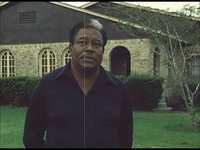 Donald Caesar interview clip
 Donald Caesar discusses the reaction of the Riverside community when his family moved in as the first black family. He tells the story of the neighbors all pooling money and making an offer to purchase their home, Jack Caesar declined. He goes on to describe threats and the eventual bombing of their home. Caesar describes the response of the Caesar family friends, as well as the police department. He describes his father's continued residence in the home until the construction of Texas State Highway 288, and the relocation of the home to another area of Houston.
-
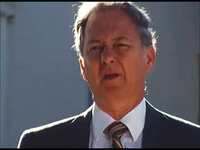 Ray Dickens interview clip
 Ray Dickens describes what Riverside was like when he lived there, and talks about the neighborhood's reaction to the bombing of Jack Caesar's home and his family moving in as the first black family. Dickens also talks about George Howell, who was widely believed to be responsible for the bombing of the Caesar home, and the neighbor's reactions to the bombing. He goes on to describe blockbusting that took place.
-
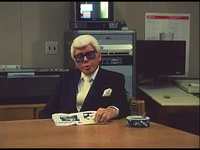 Marvin Zindler interview clip
 Marvin Zindler remembers the Jack Caesar bombing. He recalls it being unusual for an event regarding black people to make the news. He views the bombing as more of a scare tactic than an attempted murder. He recalls the attitude of the general public as one of racist indifference.
-
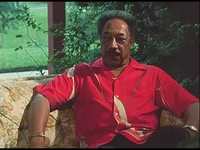 J. B. Jones interview clip
 Interview with Dr. J. B. Jones describing how "whites were tipping out" and "blacks were tipping in" when he moved to Riverside in 1959. He discusses the move from north to south of the bayou for people who wanted a less populated area. Jones points to absentee ownership and substandard apartment homes as being to blame for the deterioration of the neighborhood. Jones explains the process he went through to buy his home.
-
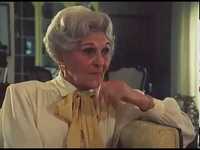 Dora Finger interview clip
 Interview with Dora Finger about her experience living in Riverside. She discusses neighborhood children, and the many large parties and holiday gatherings she hosted. Finger describes the integration of the neighborhood, including her relationship with her neighbors, the Graces, and her decision to move away from Riverside.
-
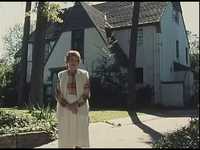 Shirley Bannerot interview clip
 Shirley Bannerot reflects on choosing Riverside as her residence, and discusses the effects on integration on the neighborhood. She talks about the civic club's involvement in starting the yard sign movement. She discusses blockbusting in Riverside, and the future of the neighborhood.
-
 Joe Russell interview clip
 Joe Russell describes how his family came to live in the Riverside area. He talks about how integration affected the neighborhood, and how long it took it took the different sides of the bayou to become predominantly black. He talks about the yard sign movement, blockbusting, and the real estate business in Riverside.
-
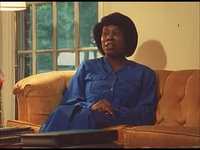 Sheila Jackson Lee interview clip
 Elwyn Lee begins the interview by discussing what it was like to grow up in Houston in the 1950s and 1960s, describing Houston as very segregated at that time. Sheila Jackson Lee describes Riverside as a pocket of black intellect and community interest, calling it a "black River Oaks." She says it a more affluent area with respect to the black community and that the population is committed to Houston, but when they speak they are not heard. They discuss why the neighborhood was opposed to the Harris County Psychiatric Center. Sheila Jackson Lee discusses the nuances of integration.
-
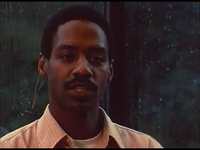 Manning M. Mott interview clip
 Manning M. Mott discusses the different reactions of white residents to the black residents moving into Riverside. Mott discusses the change in quality of city services once Riverside became a predominantly black neighborhood. Mott discusses how demographics of the Third Ward are changing. Mott says the transition of Riverside from having majority white residents to having majority black residents was violent, contrary to popular opinion. He says the presence of the KKK was felt, and the Houston Police Department was a threatening presence in the community, falsely imprisoning black residents.
-
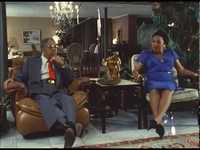 John and Drucie Chase interview clip
 Interview with John and Drucie Chase about their decision to move to Riverside Terrace in the 1950s. They discuss the purchase of the lot, and design of their home, and the reaction of white neighbors when they moved in. Describe the factors that contributed to the transition of the neighborhood from white to black residents. In particular, John Chase notes that real estate agents played a role in the "white flight," and took advantage of both sellers and buyers. They also discuss the impact of apartments in the neighborhood, and the proximity to Texas Southern University. John and Drucie both agree that Riverside Terrace is a promising, centrally located neighborhood, and believe more integration is positive.
-
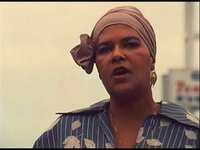 Holly Hogrobrooks interview clip
 Interview with Holly Hogrobrooks and Otis King about the sit-in protest at Weingarten's supermarket. Hogrobrooks begins by discussing the history of sit-in protests in Houston, beginning with Texas Southern University. They talk about the selection of Weingarten's supermarket, and the black community's view of Riverside on the south side of the bayou. Hogrobrooks describes the reaction of shoppers to the student protest, and their own non-violent strategy.
-
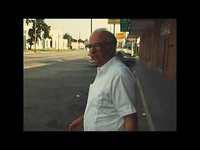 Joseph Samuels tour of Almeda Rd clip
 Joseph Samuels tours sites along Almeda Road that were significant to the Jewish community. He points out the former site of Kaplan's Delicatessen, and Dushkin's Cleaners.
-
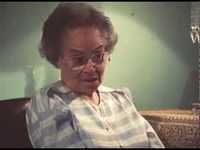 Hattie Mae White interview clip
 Hattie Mae White discusses moving from the Third Ward to Riverside. She talks about having to move out of her Southmore home due to the construction of Texas State Highway 288. She talks about the racial aspect to constructing the Harris County Psychiatric Center in Riverside.
