-
 Mehndi Laga Ke Rakhna
 Anointed & Adorned: Typical Baraat music
-
 0:08 / 2:35
Anointed & Adorned: Indian Weddings in Houston (Before the ceremony)
0:08 / 2:35
Anointed & Adorned: Indian Weddings in Houston (Before the ceremony)
-
Audio: Why Brides wear Mehendi
Soniya Gheewala Ekicia, a mehendi artist.
Getting Ready - certain vestments or preparations like mehendi are central to the process. Audio: Why Brides wear Mehendi
Soniya Gheewala Ekicia, a mehendi artist, speaks about the auspiciousness of applying mehendi for brides.
-
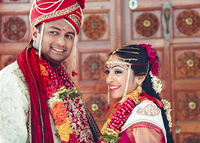 The Couples - Anointed & Adorned
 Couples interviewed for the project (Anointed & Adorned)
-
The Baraat (Groom’s Parade)
Tom Lang recounts his experience at his baraat and speaks about how every groom should have his own parade. Clip from an interview by Rati Ramadas. Edited by carl Lindhal.
-
Audio: Tradition and Ritual
Meera Gupta - the importance of two families uniting for the first time
Audio: Panditji discusses the main steps in the ritual
Pandit Padmakar talks about the origin of the basic Hindu wedding ceremony. Interview by Rati Ramadas.
-
Audio: Panditji discusses the main steps in the ritual
Pandit Padmakar talks about the origin of the basic Hindu wedding ceremony
-
Anointed & Adorned: Audio clip
Audio: Being at an Indian Wedding
Pooja Patankar speaks about the mood and setting of an Indian wedding
-
Anointed & Adorned: Audio clip
Alka Tripathy talks about weddings being a community event.
-
Anointed & Adorned: Audio clip
Anointed and Adorned audio clip based on an interview of a hindu pandit about indian weddings.
-
 Pooja Pratankar Bridal adornment
 Shringar
Indian bridal attire and adornment vary greatly, even within the Houston area; nevertheless, all the weddings share certain elements. Shringar or rites of adornment begin a few days before with the artful application of henna, known as mehendi, and initiate the transformation of a young woman into a bride. Distinctive attire, however, like the white Konkani sash shown here, can signal membership in a particular community. The veiling shown here is the final step that marks the moment of a woman’s readiness for the wedding ritual.
-
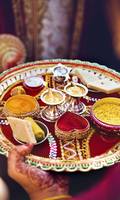 Anointed & Adorned: Indian Weddings in Houston - Baraat tray
 The baraat is a public procession by the groom – mounted on an elephant or a horse or in a fancy car – to the site of the wedding. The groom is escorted by friends and family, who announce their approval symbolically by dancing their way to a place where the two sets of parents meet. Accompanied by the rhythm of the dhol and, often, the contemporary beats of Bollywood music, the groom is greeted, garlanded and anointed. This short journey begins the joining of two families.
-
Pooja Pratankar - bridal adornment
Pooja Pratankar - bridal adornment
-
 Anointed & Adorned: Installation images
 Anointed and Adorned explores continuity and change in the artistry and festivity of Indian weddings in Houston. A complex mix of East and West, ancient and modern, Indian weddings here offer participants the opportunity to enjoy the traditions of the mother country performed with nuances that reflect a Western environment. They celebrate the beauty that resides in the old and accustomed alongside the appeal of the new and surprising.
The exhibition was created as a part of programming associated with the Houston Arts Alliance Folklife + Civic Engagement Program.
-
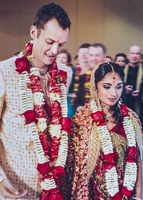 Anointed & Adorned: Indian Couple
 Indian weddings are notably diverse from one region to another, one family to the next. A core of Hindu rites rooted in the Rig Veda connects all the ceremonies. Houston’s Indian weddings draw on this Sanskrit ceremony, which is often detailed in elaborate programs that explain its numerous elements to all celebrants, Indians and non-Indians alike.
-
 Anointed & Adorned: Pheras
 Pictured is the hoven. Used to begin the metaphorical fire in the household and represent the consummation of the life of a single person. It is an integral part of the ceremony.
The Ceremony
Indian weddings are notably diverse from one region to another, one family to the next. A core of Hindu rites rooted in the Rig Veda connects all the ceremonies. Houston’s Indian weddings draw on this Sanskrit ceremony, which is often detailed in elaborate programs that explain its numerous elements to all celebrants, Indians and non-Indians alike.
The ceremonial portion of the wedding always takes place in a traditional structure erected for the occasion known as a mandap. This section of the exhibition explores five significant elements of the Hindu ceremony: Anterpat, Kanyadaan, Mangalsutra, Pheras and Saptapadi.
-
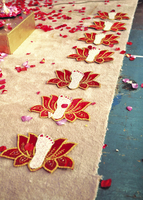 Anointed & Adorned: Saptapadi
 Literally translated to the "seven steps" the ritual is another important part of the ceremony. Seven turns around the "Pheras" (fire) are made by the couple to suggest the journey by a newlyweds as indicated by the rig veda.
The Ceremony
Indian weddings are notably diverse from one region to another, one family to the next. A core of Hindu rites rooted in the Rig Veda connects all the ceremonies. Houston’s Indian weddings draw on this Sanskrit ceremony, which is often detailed in elaborate programs that explain its numerous elements to all celebrants, Indians and non-Indians alike.
The ceremonial portion of the wedding always takes place in a traditional structure erected for the occasion known as a mandap. This section of the exhibition explores five significant elements of the Hindu ceremony: Anterpat, Kanyadaan, Mangalsutra, Pheras and Saptapadi.
-
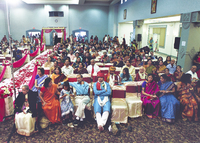 Anointed & Adorned: Indian Wedding Audience
The Ceremony
Indian weddings are notably diverse from one region to another, one family to the next. A core of Hindu rites rooted in the Rig Veda connects all the ceremonies. Houston’s Indian weddings draw on this Sanskrit ceremony, which is often detailed in elaborate programs that explain its numerous elements to all celebrants, Indians and non-Indians alike.
-
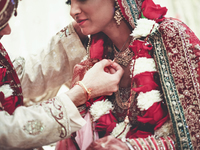 Anointed & Adorned: Mangalsutra
 The Ceremony
Indian weddings are notably diverse from one region to another, one family to the next. A core of Hindu rites rooted in the Rig Veda connects all the ceremonies. Houston’s Indian weddings draw on this Sanskrit ceremony, which is often detailed in elaborate programs that explain its numerous elements to all celebrants, Indians and non-Indians alike.
The ceremonial portion of the wedding always takes place in a traditional structure erected for the occasion known as a mandap. This section of the exhibition explores five significant elements of the Hindu ceremony: Anterpat, Kanyadaan, Mangalsutra, Pheras and Saptapadi.
-
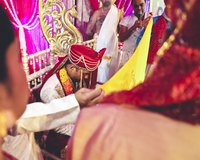 Anointed & Adorned: Ceremony (Pooja+Gautam)
 The Ceremony
Indian weddings are notably diverse from one region to another, one family to the next. A core of Hindu rites rooted in the Rig Veda connects all the ceremonies. Houston’s Indian weddings draw on this Sanskrit ceremony, which is often detailed in elaborate programs that explain its numerous elements to all celebrants, Indians and non-Indians alike.
The ceremonial portion of the wedding always takes place in a traditional structure erected for the occasion known as a mandap. This section of the exhibition explores five significant elements of the Hindu ceremony: Anterpat, Kanyadaan, Mangalsutra, Pheras and Saptapadi.
-
 Anointed & Adorned: Indian Weddings in Houston - tray
 The baraat is a public procession by the groom – mounted on an elephant or a horse or in a fancy car – to the site of the wedding. The groom is escorted by friends and family, who announce their approval symbolically by dancing their way to a place where the two sets of parents meet. Accompanied by the rhythm of the dhol and, often, the contemporary beats of Bollywood music, the groom is greeted, garlanded and anointed. This short journey begins the joining of two families.
-
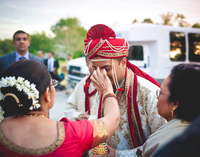 Anointed & Adorned: Baraat (Pooja+Gautam)
 From the exhibition "Anointed & Adorned: Indian Weddings in Houston" at Houston Arts Alliance,
The baraat is a public procession by the groom – mounted on an elephant or a horse or in a fancy car – to the site of the wedding. The groom is escorted by friends and family, who announce their approval symbolically by dancing their way to a place where the two sets of parents meet. Accompanied by the rhythm of the dhol and, often, the contemporary beats of Bollywood music, the groom is greeted, garlanded and anointed. This short journey begins the joining of two families.
-
 Anointed & Adorned: Ceremony (Meera+Shawn)
 The Ceremony
Indian weddings are notably diverse from one region to another, one family to the next. A core of Hindu rites rooted in the Rig Veda connects all the ceremonies. Houston’s Indian weddings draw on this Sanskrit ceremony, which is often detailed in elaborate programs that explain its numerous elements to all celebrants, Indians and non-Indians alike.
The ceremonial portion of the wedding always takes place in a traditional structure erected for the occasion known as a mandap. This section of the exhibition explores five significant elements of the Hindu ceremony: Anterpat, Kanyadaan, Mangalsutra, Pheras and Saptapadi.
-
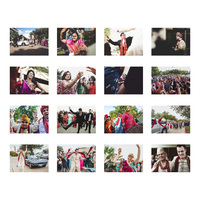 Anointed & Adorned: Indian Weddings in Houston - Baraat
The baraat is a public procession by the groom – mounted on an elephant or a horse or in a fancy car – to the site of the wedding. The groom is escorted by friends and family, who announce their approval symbolically by dancing their way to a place where the two sets of parents meet. Accompanied by the rhythm of the dhol and, often, the contemporary beats of Bollywood music, the groom is greeted, garlanded and anointed. This short journey begins the joining of two families.
-
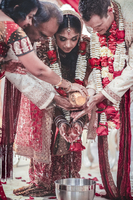 Anointed & Adorned: Ceremony (Alka + Tom)
 From the exhibition "Anointed & Adorned: Indian Weddings in Houston" at Houston Arts Alliance,
The Ceremony
Indian weddings are notably diverse from one region to another, one family to the next. A core of Hindu rites rooted in the Rig Veda connects all the ceremonies. Houston’s Indian weddings draw on this Sanskrit ceremony, which is often detailed in elaborate programs that explain its numerous elements to all celebrants, Indians and non-Indians alike.
The ceremonial portion of the wedding always takes place in a traditional structure erected for the occasion known as a mandap. This section of the exhibition explores five significant elements of the Hindu ceremony: Anterpat, Kanyadaan, Mangalsutra, Pheras and Saptapadi.
